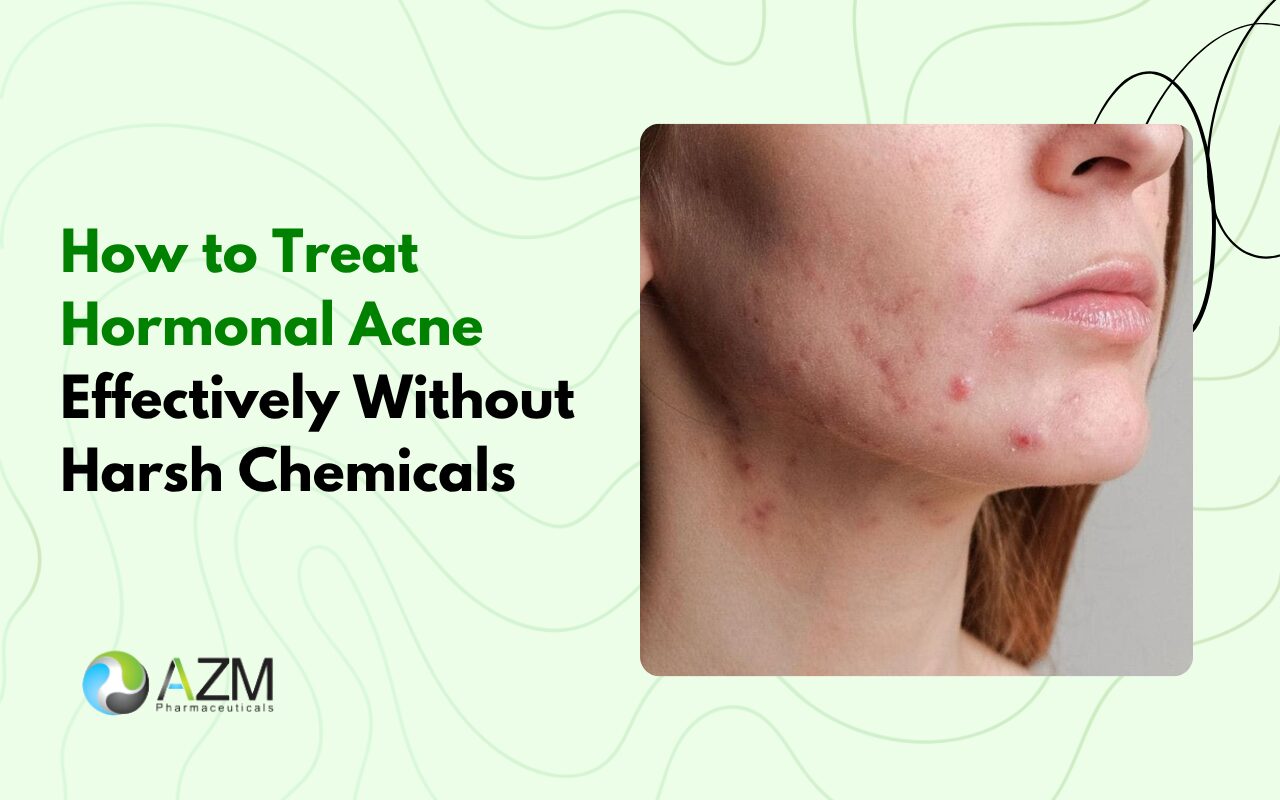
Hormonal acne is one of the most common types of acne, affecting teenagers and adults alike. It often appears as deep, painful pimples around the chin, jawline, cheeks, and lower face, and can be difficult to manage if you’re using harsh products that irritate your skin.
The good news is that you don’t have to rely on aggressive skincare products to care for hormonal acne. A gentle, consistent skincare routine that supports your skin barrier can help reduce excess oil, keep pores clean, and promote healthier-looking skin over time.
We believe that effective acne care should focus on cleansing, hydration, protection, and consistency—not harsh chemicals that may leave your skin feeling dry or irritated.
What Is Hormonal Acne?
Hormonal acne develops when hormonal fluctuations stimulate the skin’s oil glands to produce excess sebum. This extra oil can combine with dead skin cells and clog pores, creating an environment where acne breakouts are more likely to occur.
Hormonal acne commonly affects:
- Teenagers during puberty
- Women during menstrual cycles
- Pregnancy and postpartum periods
- Menopause
- Adults experiencing hormonal changes or stress
Signs of Hormonal Acne
You may be dealing with hormonal acne if you notice:
- Breakouts around the chin and jawline
- Deep, tender pimples
- Recurring acne in the same areas
- Increased oiliness
- Acne that flares during hormonal changes
While these signs are common, a dermatologist can help determine the exact cause of persistent acne.
Why Avoid Harsh Chemicals?
Many people assume that stronger products work faster, but overly harsh skincare can sometimes make acne-prone skin feel worse by disrupting the skin’s natural protective barrier.
Using aggressive products excessively may lead to:
- Dryness
- Redness
- Irritation
- Increased skin sensitivity
- An uncomfortable, tight feeling
A balanced routine often supports healthier skin more effectively than over-treating it.
Step 1: Cleanse Gently Every Day
Keeping your skin clean helps remove excess oil, dirt, and impurities that contribute to clogged pores.
Triac Anti Acne Facewash by AZM Pharmaceuticals helps:
- Remove excess oil
- Clean away dirt and impurities
- Keep pores clear
- Support acne-prone skin
- Maintain balanced skin with daily use
Cleanse your face morning and evening using lukewarm water and gentle circular motions.
Step 2: Don’t Skip Moisturizer
Many people with acne avoid moisturizer because they fear it will make their skin oilier. In reality, properly hydrated skin supports a healthier skin barrier.
A lightweight moisturizer can help:
- Maintain hydration
- Improve skin comfort
- Reduce dryness
- Support barrier function
Choose a moisturizer appropriate for your skin type.
Step 3: Wear Sunscreen Every Morning
Sun exposure may contribute to post-acne marks and uneven skin tone.
Daily sunscreen helps:
- Protect healing skin
- Reduce the appearance of pigmentation caused by sun exposure
- Support an even-looking complexion
- Defend against harmful UVA and UVB rays
Consistent sun protection is an important part of any acne-care routine.
Step 4: Follow a Consistent Routine
Hormonal acne usually doesn’t improve overnight.
A simple routine followed consistently is often more beneficial than constantly switching products.
AZM Anti Acne Bundle
The AZM Anti Acne Bundle is designed to help:
- Support acne-prone skin
- Control excess oil
- Keep pores clean
- Promote clearer-looking skin
- Simplify your daily skincare routine
Using products that work well together can help you stay consistent with your skincare.
Step 5: Support Your Skin with Healthy Habits
Lifestyle habits also play an important role in maintaining healthy skin.
Consider:
- Getting enough sleep
- Managing stress
- Eating a balanced diet
- Drinking plenty of water
- Avoiding picking or squeezing pimples
These habits complement a good skincare routine.
Common Mistakes to Avoid
If you’re dealing with hormonal acne, avoid:
- Over-cleansing your face
- Scrubbing your skin aggressively
- Using too many acne products at once
- Picking or popping pimples
- Skipping moisturizer
- Forgetting daily sunscreen
Gentle, consistent care usually delivers the best long-term results.
When Should You See a Dermatologist?
Consider consulting a dermatologist if:
- Acne is painful or cystic
- Breakouts leave scars
- Over-the-counter skincare isn’t helping after several weeks
- Acne significantly affects your confidence or daily life
A dermatologist can recommend treatments tailored to your individual needs.
Final Thoughts
Hormonal acne can be challenging, but managing it doesn’t require harsh chemicals or complicated routines. Gentle cleansing, daily hydration, sun protection, and consistency are the foundations of healthier-looking skin.
With Triac Anti Acne Facewash and the AZM Anti Acne Bundle, AZM Pharmaceuticals offers skincare solutions that help support acne-prone skin while respecting your skin’s natural barrier.