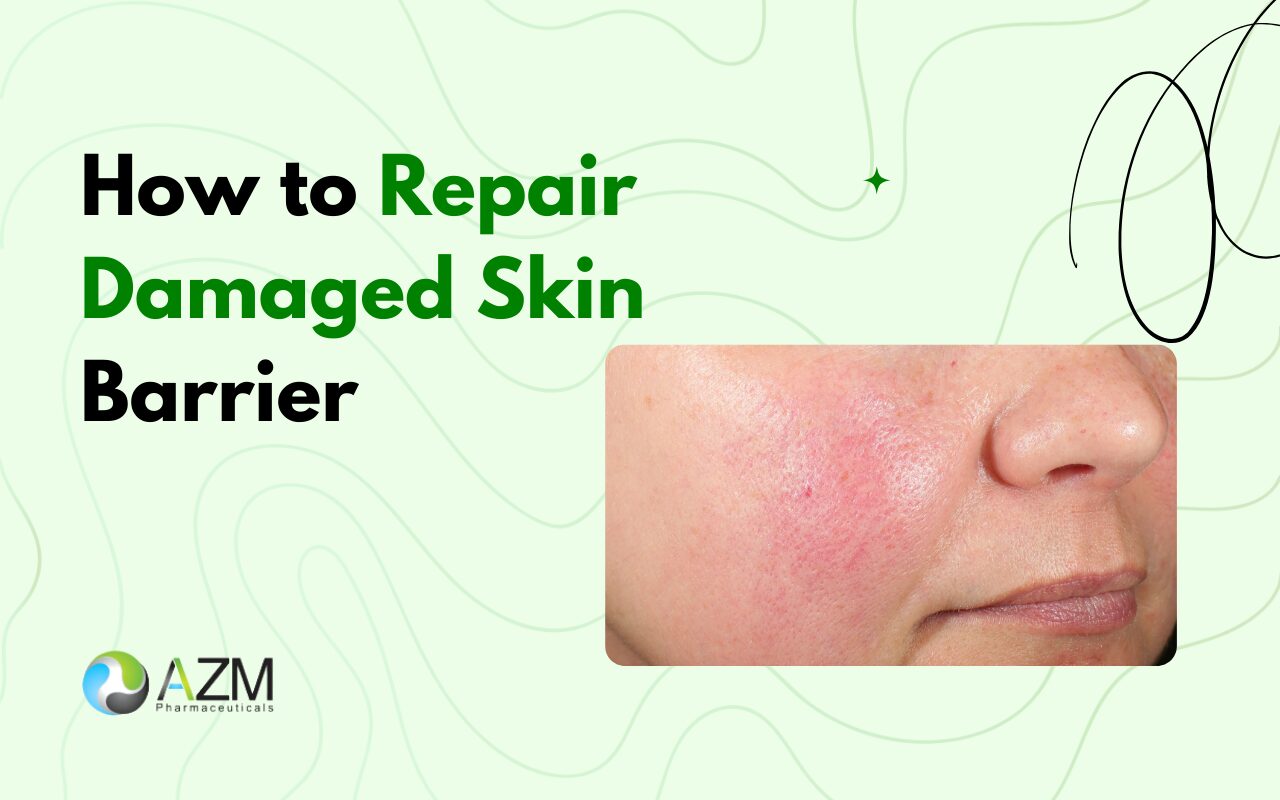
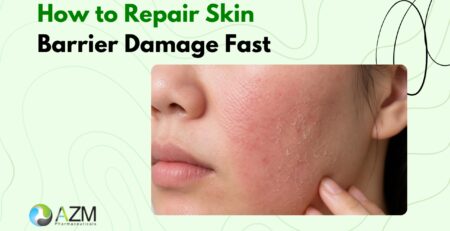
If your skin feels tight, irritated, unusually dry, or suddenly sensitive to products that never bothered you before, you may be dealing with a damaged skin barrier.
The skin barrier plays a crucial role in protecting your skin from environmental stressors, pollution, bacteria, and moisture loss. When compromised, it can lead to redness, breakouts, flaking, and long-term skin issues.
At AZM Pharmaceuticals, we emphasize barrier-focused skincare to maintain healthy, resilient skin suited to Pakistan’s climate and diverse skin types.
What Is the Skin Barrier?
The skin barrier is the outermost layer of your skin (stratum corneum). It acts like a protective shield that:
-
Prevents moisture loss
-
Blocks harmful bacteria and pollutants
-
Protects against UV damage
-
Maintains overall skin balance
When this layer is weakened, your skin becomes vulnerable and reactive.
Signs of a Damaged Skin Barrier
You may notice:
If these symptoms continue, it’s time to simplify and repair your routine.
What Causes Skin Barrier Damage?
Common causes include:
-
Over-exfoliation (chemical or physical)
-
Harsh cleansers
-
Overuse of active ingredients (retinol, acids)
-
Excessive sun exposure
-
Pollution and environmental stress
-
Very hot showers
In hot and humid climates like Pakistan, improper skincare combined with sun exposure can accelerate barrier damage.
How to Repair a Damaged Skin Barrier
1. Simplify Your Skincare Routine
Switch to a minimal routine:
-
Gentle cleanser
-
Hydrating moisturizer
-
Sunscreen (daytime only)
Avoid exfoliants, strong acids, and retinoids until your skin heals.
2. Use a Gentle, pH-Balanced Cleanser
Choose a mild cleanser that removes dirt without stripping natural oils. Over-cleansing can worsen dryness and irritation.
Wash your face twice daily with lukewarm water, avoid hot water.
3. Focus on Deep Hydration
Look for ingredients such as:
-
Ceramides
-
Hyaluronic acid
-
Glycerin
-
Panthenol
These ingredients help restore moisture and rebuild the protective barrier.
UV rays weaken the skin barrier further and slow down healing. Use a broad-spectrum sunscreen every day, even indoors if exposed to sunlight.
Sun protection is especially important in high UV index regions.
5. Avoid Active Ingredients Temporarily
Pause the use of:
-
Retinol
-
Salicylic acid
-
Glycolic acid
-
Benzoyl peroxide
Reintroduce them slowly only after your skin has fully recovered.
How Long Does It Take to Heal?
With proper care and consistency, mild barrier damage can improve within 2–4 weeks. Severe cases may take longer and require dermatological guidance.
Patience and a gentle approach are key.
AZM Pharmaceuticals’ Approach to Skin Health
At AZM Pharmaceuticals, our dermatologically inspired skincare formulations are designed to:
-
Support long-term skin health
-
Suit local environmental conditions
-
Maintain safety and effectiveness
-
Protect sensitive and compromised skin
We believe healthy skin starts with a strong barrier.
Final Thoughts
A damaged skin barrier can make your skin feel uncomfortable and unpredictable, but it is repairable. By simplifying your routine, focusing on hydration, and protecting your skin from sun damage, you can restore balance and resilience.
Healthy skin isn’t about using more products, it’s about using the right ones.