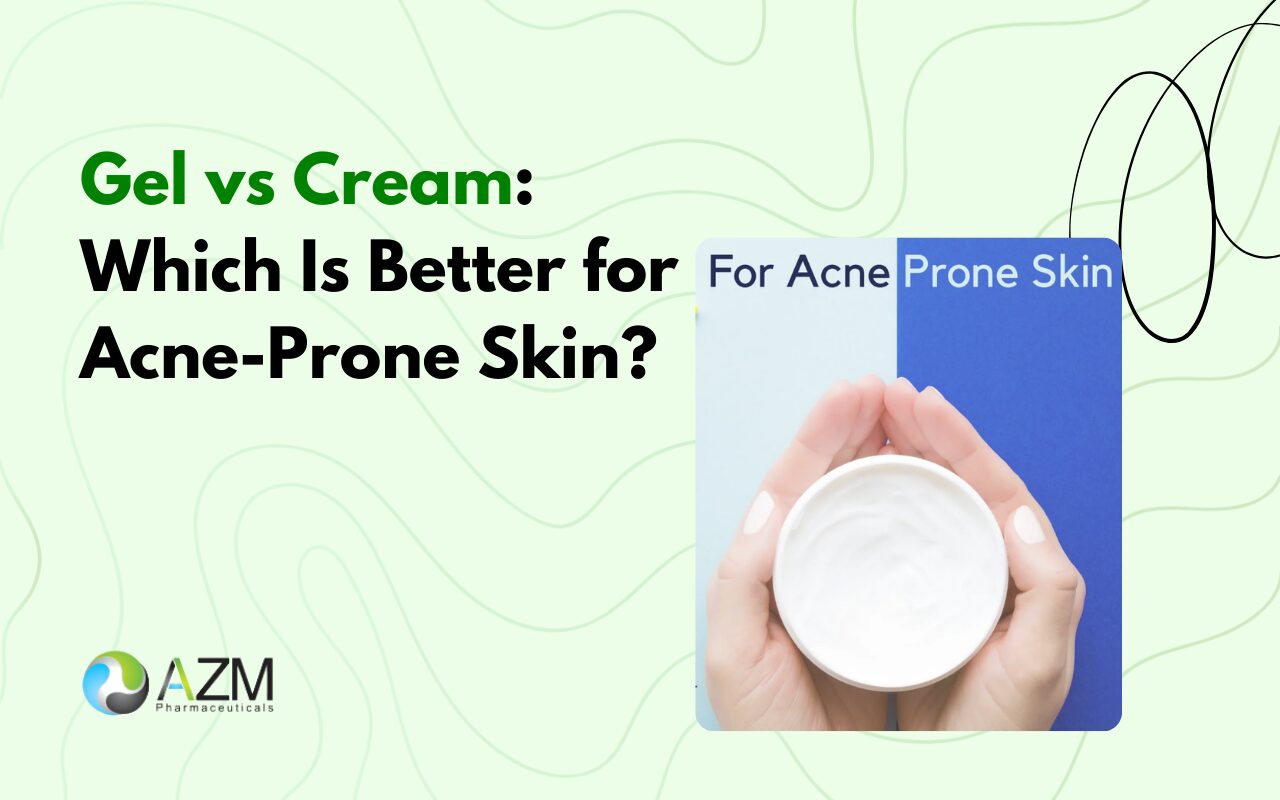
If you have acne-prone skin, choosing the right skincare texture can make a big difference. One of the most common questions people ask is whether gel-based products or cream-based products are better for controlling acne.
Both formulations have their benefits, but understanding your skin’s needs can help you choose the right option.
We focus on dermatology-inspired skincare that supports balanced oil control, skin barrier health, and long-term acne management.
Understanding the Difference Between Gel and Cream
The primary difference between gels and creams lies in their texture and composition.
Gel-based products:
-
Lightweight and water-based
-
Absorb quickly into the skin
-
Usually oil-free or low-oil
-
Ideal for oily and acne-prone skin
Cream-based products:
-
Thicker and richer in texture
-
Contain more oils and emollients
-
Provide deeper moisturization
-
Often better for dry skin
For acne-prone individuals, texture plays a major role in preventing clogged pores.
Why Gel Formulas Are Often Better for Acne-Prone Skin
People with oily or acne-prone skin usually benefit more from lightweight gel formulations.
Benefits include:
-
Less likely to clog pores
-
Lightweight and breathable
-
Absorbs quickly without greasiness
-
Helps maintain skin hydration without excess oil
Gel-based skincare is especially helpful in warm and humid climates, where heavy creams may feel uncomfortable.
When Cream Formulas May Be Helpful
Cream-based products are not always bad for acne-prone skin. In some cases, they can be beneficial.
Creams may work better if:
-
Your skin is acne-prone but also dry
-
You are using strong acne treatments that cause dryness
-
Your skin barrier needs extra hydration
The key is choosing non-comedogenic cream formulations.
The Importance of a Balanced Acne Routine
Regardless of whether you use gel or cream products, the foundation of acne care always starts with proper cleansing.
A gentle acne-focused cleanser helps remove oil, dirt, and impurities that can clog pores.
Triac Anti Acne Facewash by AZM Pharmaceuticals is designed to support acne-prone skin by helping:
Using a suitable cleanser consistently improves the effectiveness of other skincare products.
Simple Routine for Acne-Prone Skin
A minimal and consistent routine works best:
Morning Routine
-
Cleanse with Triac Anti Acne Facewash
-
Apply lightweight moisturizer (gel-based if oily)
-
Use sunscreen
Night Routine
-
Cleanse with Triac Anti Acne Facewash
-
Apply moisturizer
-
Use acne treatments if needed
Keeping your routine simple helps maintain skin balance.
Final Thoughts
Both gel and cream formulations have their place in skincare. However, for most people with acne-prone or oily skin, gel-based products are usually the better option due to their lightweight texture and lower risk of clogging pores.
Maintaining a consistent routine with effective cleansing and balanced hydration is the key to clearer skin.
At AZM Pharmaceuticals, we develop dermatology-inspired skincare solutions designed to help manage acne while supporting long-term skin health.