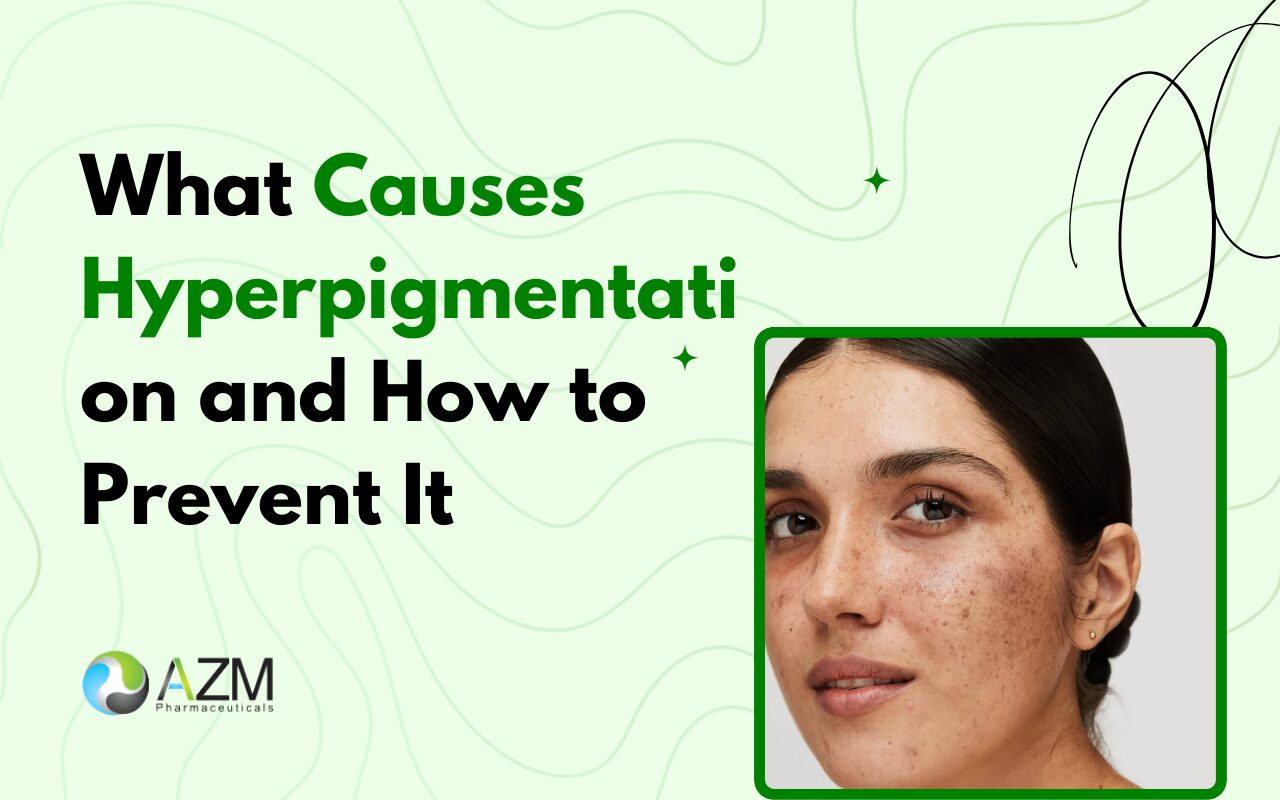
Hyperpigmentation is one of the most common skin concerns in Pakistan. It appears as dark patches, uneven skin tone, or stubborn spots on the face and body. While it is generally harmless, it can affect confidence and overall skin appearance.
At AZM Pharmaceuticals, we focus on scientifically backed dermatological solutions that help maintain even, healthy skin while addressing common pigmentation concerns.
What Is Hyperpigmentation?
Hyperpigmentation occurs when the skin produces excess melanin, the pigment responsible for skin color. When melanin production becomes uneven or excessive, it leads to darkened areas on the skin.
Common types include:
Understanding the cause is the first step toward effective prevention.
What Causes Hyperpigmentation?
1. Sun Exposure
Excessive exposure to UV rays is the leading cause of hyperpigmentation. Sunlight stimulates melanin production, which can result in dark spots and uneven tone.
In high UV index regions like Pakistan, daily sun exposure without protection significantly increases the risk.
2. Acne and Skin Inflammation
After acne heals, it can leave behind dark marks known as post-inflammatory hyperpigmentation. Picking or squeezing pimples increases the chances of long-lasting spots.
3. Hormonal Changes
Hormonal fluctuations during pregnancy, oral contraceptive use, or medical conditions can trigger melasma, which appears as symmetrical dark patches, especially on the cheeks and forehead.
4. Skin Injury or Irritation
Burns, cuts, aggressive treatments, and overuse of harsh skincare products can trigger pigmentation as part of the healing process.
5. Aging
With age, cumulative sun exposure and slower skin renewal can lead to age spots and uneven pigmentation.
How to Prevent Hyperpigmentation
Prevention is more effective than treatment. Here are practical, dermatologist-recommended steps:
Daily sun protection is the most important preventive step. Choose a broad-spectrum sunscreen and apply it generously every morning.
Reapply every 3–4 hours when outdoors.
2. Avoid Picking Acne
Resist touching or squeezing pimples. This reduces inflammation and lowers the risk of post-acne dark spots.
3. Maintain a Gentle Skincare Routine
Over-exfoliating or using strong acids excessively can irritate the skin and trigger pigmentation. Stick to:
4. Use Brightening Ingredients Carefully
Ingredients such as vitamin C, niacinamide, and gentle exfoliating acids can help maintain an even tone when used properly and consistently.
Avoid mixing too many active ingredients without guidance.
5. Protect Your Skin Barrier
A healthy skin barrier reduces inflammation and prevents pigmentation triggered by irritation. Focus on hydration and barrier repair.
When to Seek Professional Advice
If pigmentation persists or worsens despite proper care, consult a dermatologist. Some cases require prescription treatments or professional procedures.
AZM Pharmaceuticals’ Approach to Skin Health
At AZM Pharmaceuticals, our skincare formulations are developed with safety, quality, and local climate considerations in mind. We aim to provide effective dermatological solutions that support:
Final Thoughts
Hyperpigmentation is common but manageable. With consistent sun protection, gentle skincare, and scientifically informed product choices, you can prevent and reduce dark spots effectively.
Healthy, radiant skin starts with prevention and daily protection.